

In the logistics industry, time is money. But when you are shipping fresh produce, frozen seafood, or temperature-sensitive pharmaceuticals, time isn’t just money—it is survival.
Dubai is one of the world’s most critical hubs for the import and re-export of perishable goods. However, the UAE’s extreme summer climate presents a massive challenge. A container of premium European chocolate or vital vaccines left sitting on a tarmac or loading dock in 45°C heat will be ruined in a matter of minutes.
Maintaining the “Cold Chain”—an unbroken, temperature-controlled supply chain from origin to destination—requires specialized equipment, flawless timing, and rapid customs clearance.
At Chevron Sea Shipping, we handle the complexities of temperature-sensitive freight. Here is how we protect your perishable cargo as it moves through Dubai.
1. The Backbone of the Operation: Reefer Containers
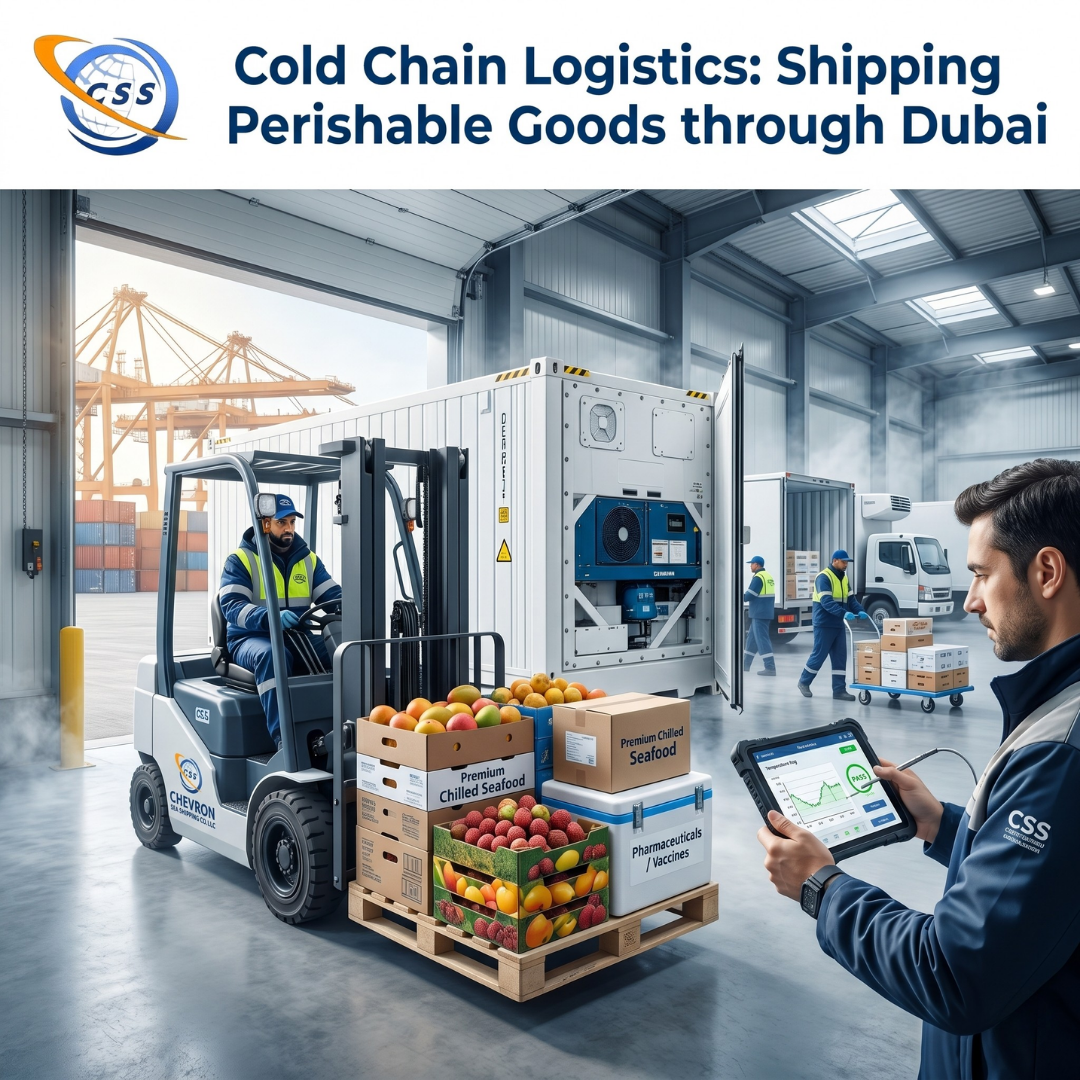
Standard shipping containers are effectively steel ovens in the Middle Eastern sun. Perishable goods must travel in Refrigerated Containers (Reefers).
- Active Cooling: Reefers are equipped with their own active refrigeration units. They plug directly into the cargo ship’s power supply during the ocean voyage, and into specialized generators (gensets) when loaded onto our transport trucks.
- We don’t just “make it cold.” Different products need very specific microclimates. We can set exact temperatures, control humidity levels, and even manage ventilation to remove the ethylene gas produced by ripening fruits. This ensures your produce arrives fresh.
2. Air Freight for High-Value Perishables
For highly sensitive items with extremely short shelf lives (like fresh flowers, chilled prime meats, or specific medical biologics), sea freight takes too long.
- The Air Advantage: We utilize premium air cargo networks with dedicated cold-storage facilities at Dubai International Airport (DXB) and Al Maktoum International (DWC).
- Thermal Blankets and Dry Ice: For air transit, we use advanced passive cooling methods, including heavy-duty thermal blankets and dry ice packing (strictly regulated as Dangerous Goods), to maintain the required temperature from the airport to your facility.
3. Beating the Bottleneck: Fast-Track Customs Clearance
The most dangerous part of the cold chain is the border. Even the best reefer container cannot save your goods if they are held up in customs for a week.
- Regulatory Approvals: To bring food or medicine into the UAE, you must get strict pre-approvals from either the Dubai Municipality (Food Safety Department) or the Ministry of Health and Prevention (MOHAP).
- Pre-Clearance Protocol: Our own customs brokers don’t wait for the ship to dock. Instead, they use the Mirsal 2 system to process your phytosanitary certificates, health certificates, and commercial invoices in advance. This ensures that your perishable cargo passes through port inspections quickly and is moved out of Jebel Ali right away.
4. Cross-Docking and Cold Storage Warehousing
Sometimes, your cargo needs to be broken down before final delivery.
If you are importing a massive FCL (Full Container Load) of frozen poultry and need it distributed to 10 different supermarket locations across the UAE, we use temperature-controlled cross-docking.
The goods are moved directly from the shipping container into our chilled delivery trucks in a loading bay maintained at a constant temperature. This means that the cold chain is never broken, not even for a second.
5. Real-Time Temperature Monitoring
Hope is not a strategy in cold chain logistics. You need proof that your goods were kept safe.
We use advanced data loggers that record the container’s temperature throughout the journey. This provides you with an unbroken audit trail—crucial for quality assurance, health inspections, and compliance with marine insurance requirements.
Protect Your Profits That Go Bad.
A broken cold chain can result in deliveries being turned down, damage your brand’s reputation, and cost you a lot of money. Work with a logistics company that knows how important it is to keep temperature-sensitive cargo safe and on time.
Speak to our Cold Chain Logistics experts today to secure your next perishable shipment.
- 📞 Direct Line / WhatsApp: +971 54 400 6210
- 📧 Email: sales@chevron-shipping.com